
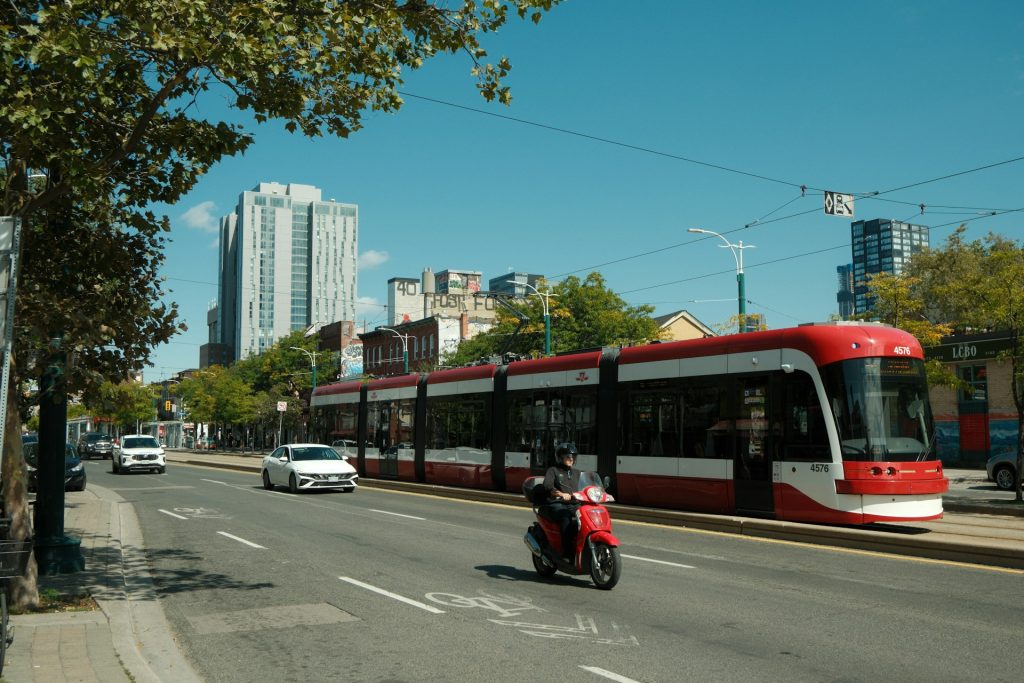
Sumber: https://unsplash.com/id/foto/trem-merah-dan-putih-melaju-di-jalan-kota-f3atEQgTBBk
The perpetual roar of engines and the sight of endless brake lights have become the “uninvited guests” in our daily lives. As urban populations swell, the demand for efficient transit systems has never been higher, yet governments often face a daunting financial wall. This is where the concept of public private partnership emerges as a game-changer, bridging the gap between ambitious infrastructure goals and limited fiscal capacity. By leveraging private sector innovation and capital, cities can finally implement long-term transportation solutions that were once deemed financially impossible.
The Infrastructure Paradox: Growing Cities vs. Shrinking Budgets
For many developing nations and rapidly expanding metropolises, infrastructure development is a race against time. The traditional procurement model—where the government pays for, builds, and operates everything—is increasingly hitting a ceiling.
The Cost of Congestion
According to World Bank data, traffic congestion in major Southeast Asian cities can cost up to 2–5% of a nation’s GDP due to lost productivity and wasted fuel. It isn’t just a matter of convenience; it’s a massive economic leak.
The Fiscal Constraint
Governments often find themselves in a “tight spot.” They need to build Light Rail Transit (LRT), Mass Rapid Transit (MRT), and integrated bus systems, but the state budget (APBN) is already allocated to education, healthcare, and social subsidies. This fiscal “straitjacket” often leads to delayed projects or substandard maintenance.
Why Public Private Partnership (PPP) is the Catalyst for Change
A Public Private Partnership, known in Indonesia as Kerjasama Pemerintah dan Badan Usaha (KPBU), is not just a funding mechanism; it is a risk-sharing philosophy. It allows the public sector to benefit from the efficiency, technology, and management expertise of the private sector.
1. Moving Beyond “Out-of-Pocket” Spending
In a PPP scheme, the private partner typically handles the financing, construction, and operation of the transport facility. The government, instead of paying a massive lump sum upfront, pays back the investment over a long-term period (often 15 to 30 years) through Availability Payments or user tariffs. This keeps the state budget healthy while the citizens enjoy the benefits today.
2. Efficiency That Breeds Quality
The private sector operates on the principle of optimization. When a private entity is responsible for the maintenance of a rail line for 20 years, they are incentivized to build it right the first time using high-quality materials and smart technology. This “life-cycle costing” approach ensures that the infrastructure doesn’t crumble five years after the ribbon-cutting ceremony.
3. Risk Allocation: The Safety Net
Infrastructure projects are like sailing through a storm; risks can come from anywhere—geological challenges, fluctuating material prices, or unexpected delays. In a traditional model, the government bears all the risks. In a PPP, risks are allocated to the party best equipped to manage them. Construction risks go to the contractor, while land acquisition risks usually stay with the government.
Global Trends: Success Stories in Transit Transformation
The shift toward PPPs in transportation is a global phenomenon. Look at the London Underground’s upgrades or the Sydney Metro; these projects utilized private expertise to modernize aging systems.
- In Asia: Countries like India and the Philippines have significantly reduced urban gridlock by inviting private developers to manage toll roads and rail systems.
- The “User Pays” vs. “Government Pays” Balance: Modern PPPs are becoming more sophisticated, using “Value Capture” strategies—where the increase in land value around a new train station is used to help fund the transport project itself.
Technological Integration: The “Secret Sauce” of Private Participation
One of the biggest advantages of involving the private sector in public transport is the rapid adoption of technology. Public agencies often struggle with the slow pace of procurement for new software, but private partners can implement:
- AI-Driven Traffic Management: Systems that adjust signal timings in real-time based on traffic flow.
- Integrated Payment Systems: A single tap-and-go card that works for buses, trains, and even shared bikes.
- Real-Time Data Analytics: Providing commuters with precise arrival times, which significantly increases the “trust factor” in public transit.
Addressing the Challenges: Transparency and Regulation
While PPPs offer a glowing path forward, they are not a “magic wand.” For a PPP to succeed, it requires a robust legal framework and institutional support. This is where specialized agencies play a crucial role in providing Government Guarantees and managing the Viability Gap Fund (VGF) to ensure projects remain bankable for investors while staying affordable for the public.
Without transparency, PPPs can lead to “hidden debts.” Therefore, the involvement of a dedicated guarantee institution is essential to ensure that every contract is fair, transparent, and aligned with the public interest.
Conclusion: A Future Without Gridlock
Transforming public transportation is no longer a luxury—it is a necessity for economic survival. By embracing the Public Private Partnership model, the government can transform the dream of a seamless, modern, and congestion-free city into a reality. We can build the arteries of our economy without bleeding the treasury dry.
As we look toward the future, the collaboration between the state’s vision and the private sector’s agility will be the bridge that carries us over the sea of traffic jams. To ensure these complex projects are successful, bankable, and sustainable, expert guidance and robust guarantees are paramount.
If you are looking to understand more about infrastructure financing, project guarantees, or how to successfully implement a KPBU scheme in Indonesia, you should consult with the experts. Learn how to navigate the complexities of infrastructure development by reaching out to PT PII, the leading institution in providing infrastructure guarantees and facilitating sustainable partnerships for a better Indonesia.